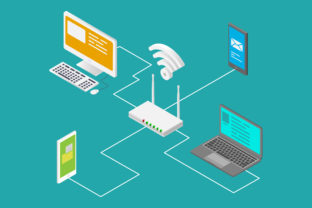
Wireless Concept of Isometric Design
In the crowded landscape of digital illustration, clarity often gets lost in abstraction. When explaining complex technologies like Wi-Fi networks, cloud computing, or IoT ecosystems, flat icons sometimes fail to convey depth, while photorealistic renders can feel heavy and dated. This is where the Wireless Concept of Isometric Design steps in as a vital visual language. It bridges the gap between technical accuracy and aesthetic appeal, offering a three-dimensional perspective that feels tangible yet stylized. For creators, marketers, and educators, this approach transforms invisible signals into visible, structured narratives.
Isometric design removes the vanishing points found in traditional perspective drawing. Instead, parallel lines remain parallel, creating a grid-like structure that allows viewers to see multiple sides of an object simultaneously. When applied to wireless technology—routers broadcasting signals, smartphones connecting to clouds, or laptops syncing data—it creates a sense of organized complexity. The result is a visual style that feels modern, precise, and inherently trustworthy. It suggests that the technology behind the image is just as structured and reliable as the illustration itself.
The Visual Logic of Wireless Technology
Understanding why this style works requires looking at how we perceive connectivity. Wireless signals are intangible; they exist in the air, invisible to the naked eye. Representing them with simple arrows or dots can be effective for basic diagrams but lacks emotional resonance. Isometric vector illustrations allow designers to build entire environments around these devices. You can depict a router not just as a box, but as the central hub of a glowing network, with data streams flowing visibly toward connected laptops and phones.
This method excels because it adds spatial context without overwhelming the viewer. A standard 2D icon of a smartphone tells you "this is a phone." An isometric illustration of a smartphone floating above a city grid, connected by pulsing lines to a server tower, tells a story about mobility, infrastructure, and speed. It invites the audience to explore the scene, following the lines of connection from one device to another. This narrative quality is essential for marketing materials where the goal is to explain a service or product quickly and memorably.
Key Elements of Effective Vector Illustrations
To achieve a professional look, specific elements must be balanced within the composition. First, the angle is critical. The standard 30-degree angle provides a natural balance between the top, front, and side views, ensuring that recognizable features of devices like keyboards, screens, and antennas are clearly visible. Second, lighting plays a massive role. Soft, directional shadows ground the floating objects, giving them weight and preventing the scene from feeling too chaotic. Finally, color coding is used strategically to differentiate between types of connections, such as using blue for secure data transfer and green for active status indicators.
Consistency is the backbone of any successful isometric project. If a laptop in the foreground uses a specific shading technique, every other device in the background should follow the same rules. This uniformity helps the brain process the information faster. When a user scans a landing page filled with these illustrations, the consistent style signals professionalism and attention to detail. It reassures the audience that the brand understands its own technology deeply enough to visualize it with precision.
Creative Applications Across Industries
The versatility of the Wireless Concept of Isometric Design extends far beyond tech blogs. Different industries leverage this style to solve unique communication challenges. In the software sector, SaaS companies use these illustrations to visualize dashboard interfaces and backend processes. Instead of showing a screenshot that might date quickly, an isometric representation of a server room or a cloud architecture remains timeless and adaptable.
Educators and instructional designers find immense value in this approach when creating tutorials. Explaining how a smart home system works becomes much easier when students can see a 3D cutaway view of a house with routers, sensors, and phones all interconnected. The depth provided by the isometric view allows for layering information without clutter. Users can mentally peel back layers of the illustration to understand the flow of data, making abstract concepts concrete.
Marketing teams also utilize this style for campaign visuals. A promotional banner for a new 5G plan might feature a sleek smartphone surrounded by a dynamic burst of isometric data nodes. This visual metaphor communicates speed and capacity instantly. Unlike stock photos of people holding phones, which can feel generic, custom isometric vectors offer a unique brand identity that stands out in social media feeds and email newsletters.
Adapting Styles for Specific Audiences
While the core principles remain the same, the execution can vary significantly based on the target audience. For a B2B audience consisting of IT professionals, the illustrations should lean towards technical accuracy. Use realistic proportions for servers and routers, include recognizable ports and cables, and stick to a more muted, corporate color palette. The goal here is credibility and precision.
Conversely, when targeting consumers or hobbyists, the style can become more playful and vibrant. Exaggerate the glow of the signal waves, add whimsical details like floating emojis or animated particles, and use bold, saturated colors. This approach makes technology feel accessible and exciting rather than intimidating. The key is to match the visual tone to the emotional state you want to evoke in your audience. Whether it's trust, excitement, or curiosity, the design choices should support that objective.
Practical Strategies for Implementation
For freelancers and small business owners looking to incorporate this style, starting small is often the best strategy. You do not need to build an entire 3D world immediately. Begin by isolating key components: a single router, a laptop, or a smartphone. Master the geometry of these individual assets before attempting to connect them into a larger ecosystem. Many vector software tools now offer isometric grids and plugins that streamline the creation process, allowing even non-3D artists to produce high-quality results.
When organizing a project, maintain a strict library of reusable assets. Create a set of standard icons for common devices and connection types. This ensures that if you need to update a website or create a new presentation later, the visual language remains consistent. Consistency builds recognition. Over time, your audience will begin to associate that specific isometric style with your brand, reinforcing your message every time they encounter it.
It is also crucial to consider accessibility. While isometric designs are visually rich, they must still be legible. Ensure that text labels are placed outside of the main graphical elements or on flat surfaces where they won't be distorted by the perspective. High contrast between the foreground objects and the background is essential for readability across different screen sizes. A design that looks stunning on a desktop monitor should not fall apart when viewed on a mobile device.
Future Trends and Continuous Innovation
As technology evolves, so does the way we visualize it. The rise of augmented reality (AR) and virtual reality (VR) presents new opportunities for isometric design. These static illustrations can serve as the foundation for interactive experiences, where users can rotate and explore the wireless networks in real-time. The clean lines and clear structures of isometric art translate exceptionally well into 3D environments, making them a future-proof choice for forward-thinking brands.
Furthermore, the integration of motion graphics is becoming increasingly common. Static isometric images are powerful, but adding subtle animations—like a rotating antenna or a pulsing data stream—can capture attention in seconds. This combination of static precision and dynamic movement creates a compelling visual experience that resonates with audiences accustomed to fast-paced digital content.
Ultimately, the Wireless Concept of Isometric Design is more than just a trend; it is a functional tool for communication. It empowers creators to turn the invisible forces of our digital world into something we can see, understand, and appreciate. By focusing on clarity, consistency, and creative application, designers and marketers can craft visuals that not only look good but also deliver meaningful insights. Whether you are building a brand identity, teaching a complex topic, or launching a new product, this design philosophy offers a robust framework for success.